





The Future of HR Technology in Nepal
Human Resource Management is evolving rapidly across the world, and Nepal is no exception. As businesses continue their digital transformation journey, traditional HR practices are gradually being replaced by smart, automated, and data-driven solutions.
From attendance tracking and payroll automation to cloud-based employee management systems, HR technology is changing how organizations manage their workforce.
The future of HR technology in Nepal is not just about reducing paperwork, it is about improving efficiency, enhancing employee experiences, and enabling businesses to make smarter decisions.
In this blog, we'll explore the emerging trends shaping HR technology in Nepal and how businesses can prepare for the future.
The Shift from Manual HR to Digital HR
Many organizations in Nepal still rely on spreadsheets, paper files, and manual HR processes. While these methods may work for smaller teams, they often become inefficient as businesses grow.
Digital HR systems help organizations:
- Automate repetitive tasks
- Improve data accuracy
- Reduce administrative workload
- Enhance employee experience
- Access real-time workforce information
As more businesses recognize these benefits, HR software adoption in Nepal continues to increase across various industries.
Key Trends Shaping the Future of HR Technology in Nepal
1. HR Process Automation
One of the biggest developments in HR technology is automation.
Tasks that previously required significant manual effort can now be completed automatically, including:
- Attendance management
- Payroll processing
- Leave approvals
- Employee onboarding
- Report generation
Automation reduces errors while allowing HR teams to focus on more strategic responsibilities.
2. Cloud-Based HR Systems
Cloud technology is becoming increasingly popular among Nepali businesses.
Unlike traditional software that requires local installation, cloud-based HR systems offer:
- Access from anywhere
- Automatic updates
- Better data security
- Reduced IT maintenance
- Scalability for growing businesses
As remote and hybrid work models become more common, cloud HR solutions will continue to gain importance.
3. Mobile-First HR Management
Today's workforce expects instant access to information through mobile devices.
Modern HR platforms now provide mobile applications that allow employees to:
- Check attendance records
- View payslips
- Apply for leave
- Access company notices
- Update personal information
Mobile accessibility improves convenience and employee engagement while reducing administrative workload.
4. Data-Driven HR Decision Making
Businesses are increasingly using workforce data to make better decisions.
Modern HR software provides valuable insights such as:
- Attendance trends
- Employee turnover rates
- Leave patterns
- Workforce productivity
- Payroll analytics
These insights help organizations improve workforce planning and operational efficiency.
5. Biometric & Smart Attendance Integration
Attendance tracking is becoming smarter and more accurate.
Modern HR systems now integrate with:
- Fingerprint devices
- Face recognition systems
- RFID cards
- Mobile attendance applications
These technologies help eliminate attendance manipulation while improving transparency.
6. Employee Self-Service Portals
The future of HR is empowering employees to manage routine tasks independently.
Employee self-service features allow staff to:
- Download payslips
- Request leave
- View attendance records
- Update personal details
- Access HR documents
This reduces dependency on HR departments and improves overall efficiency.
The Growing Importance of Payroll Automation
Payroll management remains one of the most critical HR functions.
Future-ready payroll systems help businesses:
- Automate salary calculations
- Manage allowances and deductions
- Generate payslips instantly
- Reduce payroll errors
- Improve compliance and record keeping
As organizations expand, payroll automation will become a necessity rather than an option.
Industries Driving HR Technology Adoption in Nepal
Several sectors are actively investing in HR technology, including:
- Corporate Offices
- Manufacturing Industries
- Educational Institutions
- Healthcare Organizations
- Hospitality Businesses
- Trading Companies
- IT Companies
- NGOs and INGOs
As workforce management becomes more complex, digital HR solutions are becoming increasingly valuable across all industries.
Challenges Businesses May Face During Digital HR Adoption
While the benefits of HR technology are significant, businesses may face certain challenges during the transition from manual processes to digital systems. Employees may initially resist change, especially if they are accustomed to traditional ways of managing HR tasks. Organizations may also need to invest time in training staff, migrating existing employee data, and adapting internal processes to the new system. For some businesses, implementation costs can also be a concern.
However, with proper planning, user-friendly software, and adequate support, these challenges can be managed effectively, allowing businesses to achieve long-term operational improvements.
How Businesses Can Prepare for the Future
To stay competitive in an increasingly digital business environment, organizations should begin modernizing their HR operations today. This includes moving away from manual record-keeping, automating payroll and attendance management, and adopting cloud-based HR solutions that provide greater flexibility and accessibility. Businesses should also focus on utilizing workforce data to make informed decisions and improve employee experiences.
By investing in scalable HR technology and embracing digital transformation early, organizations can enhance efficiency, alleviate administrative burdens, and position themselves for long-term sustainable growth.
Why FlexYear Supports the Future of HR
As HR technology continues to evolve, businesses need solutions that can adapt to changing workforce requirements.
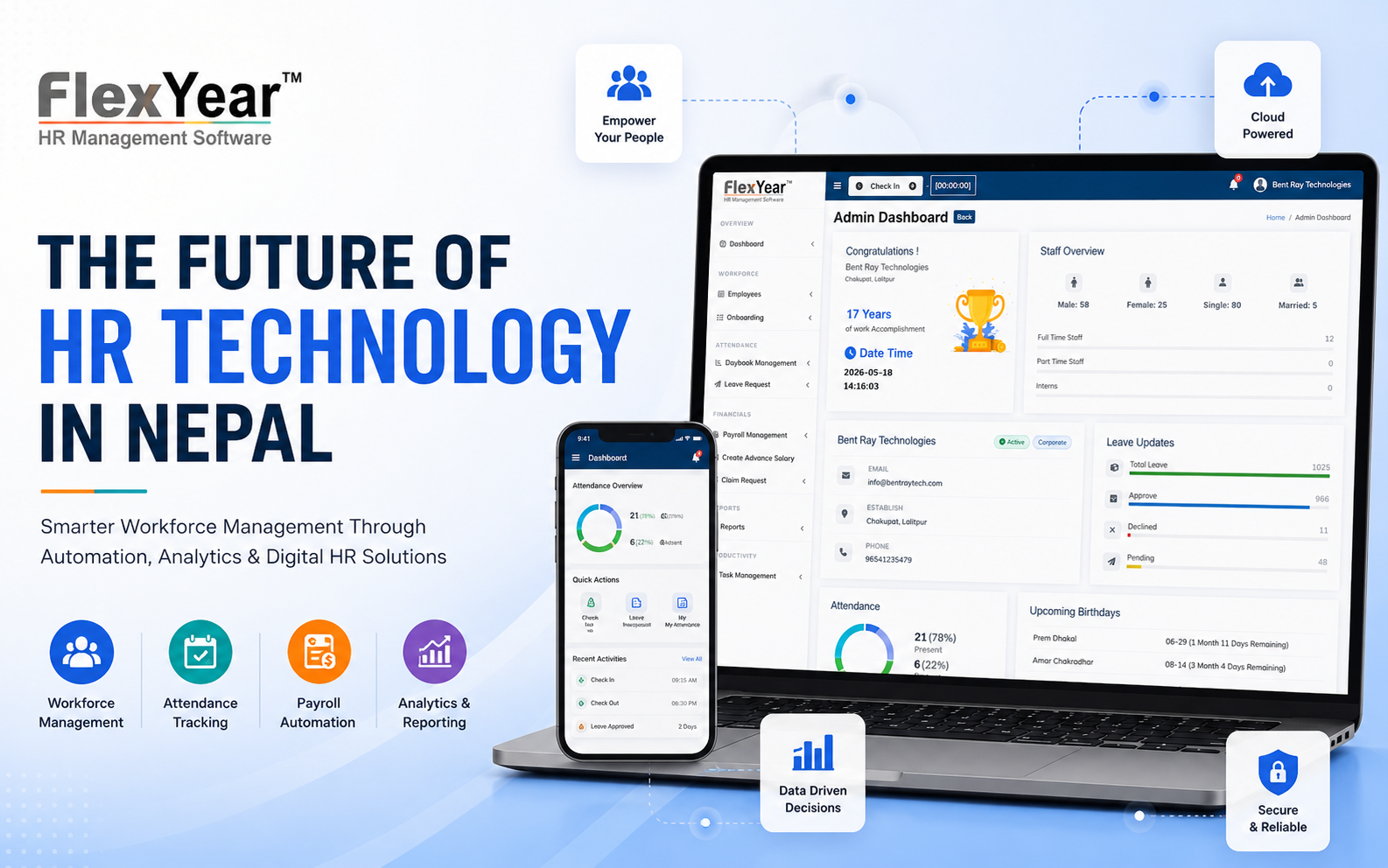
FlexYear HR Management Software helps organizations modernize HR operations through:
- Automated attendance management
- Payroll processing and payslip generation
- Leave management
- Employee database management
- Reporting and analytics
- Biometric integration
- User-friendly digital workflows
Designed for Nepali businesses, FlexYear supports organizations as they move toward smarter and more efficient HR management.
Frequently Asked Questions (FAQs)
1. What is HR technology?
HR technology refers to software and digital tools used to manage employee information, payroll, attendance, leave, recruitment, and other HR operations.
2. Why is HR technology important?
HR technology improves efficiency, reduces errors, automates repetitive tasks, and provides valuable workforce insights.
3. Will HR automation replace HR professionals?
No. Automation handles repetitive administrative tasks, allowing HR professionals to focus on employee development, strategy, and organizational growth.
4. What is the future of HR software in Nepal?
The future includes cloud-based systems, mobile access, payroll automation, workforce analytics, biometric integration, and AI-powered HR solutions.
5. Is HR software suitable for small businesses?
Yes. Modern HR software helps small businesses save time, improve accuracy, and manage employees more efficiently.
Ready to Modernize Your HR Operations?
Managing attendance, payroll, leave requests, employee records, and reports manually can slow down business growth and increase the risk of errors. FlexYear HR Management Software helps Nepali businesses streamline HR processes through automation, real-time reporting, biometric integration, and user-friendly digital workflows.
Whether you're a growing company or an established organization, FlexYear provides the tools needed to simplify HR management and improve operational efficiency.
Get Started with FlexYear Today
Discover how FlexYear HR Management Software can help your business save time, reduce errors, and build a more efficient workplace.